Recent News
- 2026: Paper accepted to IAAI 2026 (AAAI Conference), Applied ML Track, on hospital-acquired infection prediction.
- 2025: Advanced to PhD Candidate status in Computer Science at the University of Virginia.
- 2025: Paper accepted to IEEE Access on graph-based spatio-temporal modeling of vaccine hesitancy.
- Spring 2025: Teaching Assistant for Introduction to Algorithmic Economics, University of Virginia.
- Fall 2024 & Spring 2024: Teaching Assistant.
Publications
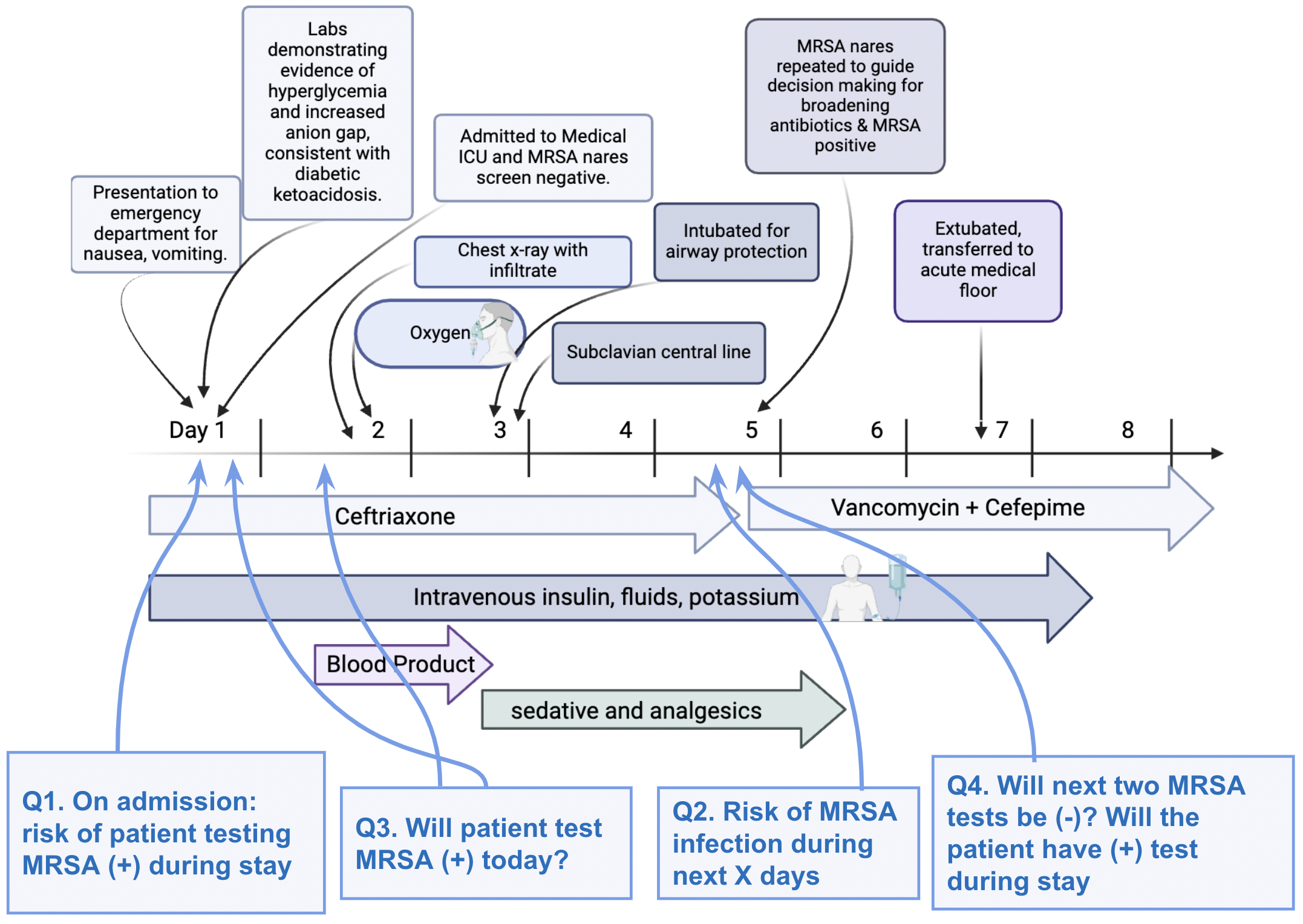
Prediction of Hospital Associated Infections During Continuous Hospital Stays
We present GenHAI, a hybrid generative modeling framework designed to predict and reason about hospital-acquired MRSA infections during a patient’s continuous hospital stay. The model supports time-evolving risk estimation, forecasting of future test outcomes, and counterfactual what-if analysis to aid clinical decision-making and infection control.
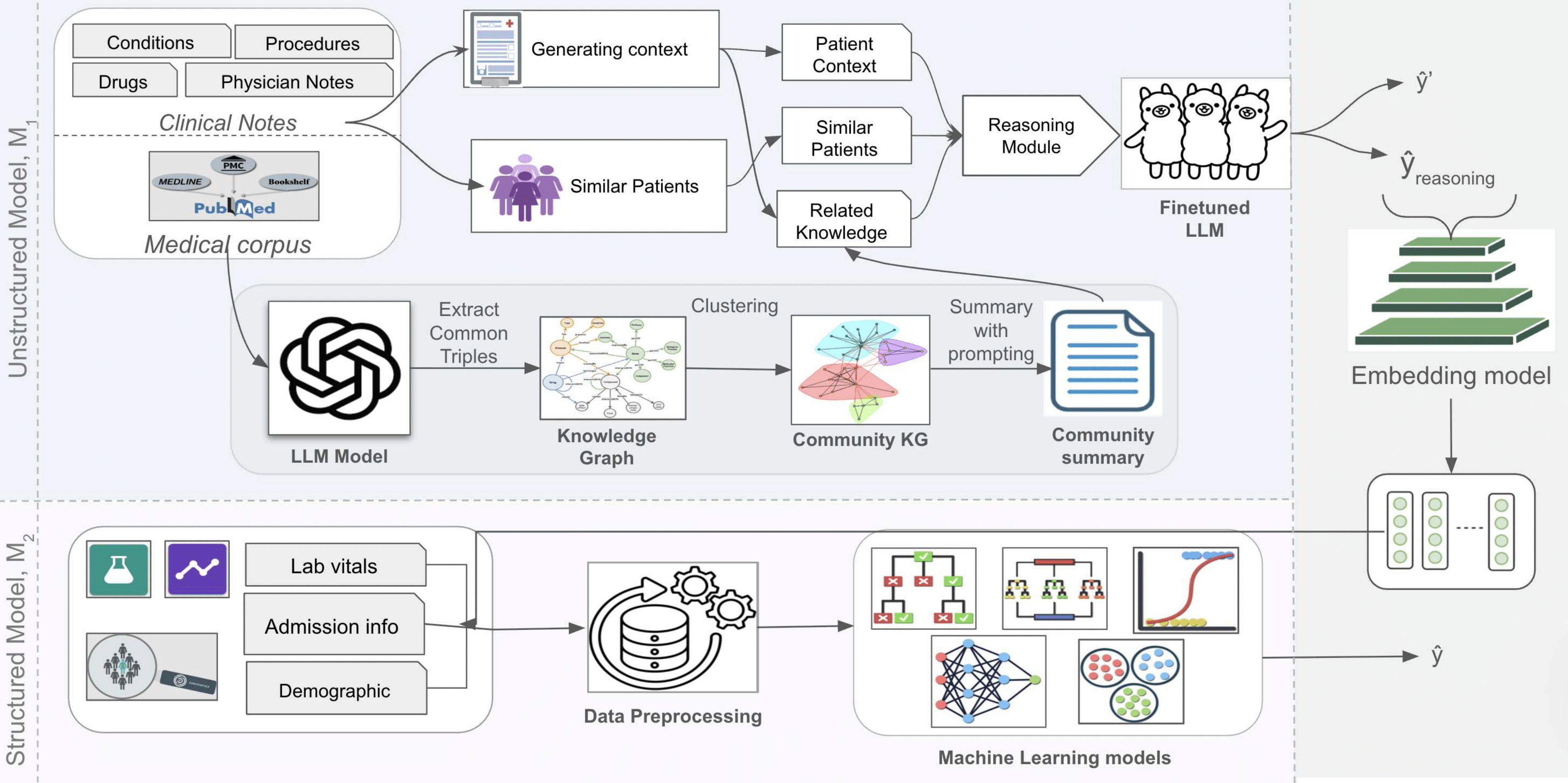
Knowledge-Augmented Large Language Model for Multimodal EHR-Based Risk Prediction: Development and Validation Study
KAMELEON is a knowledge-augmented multimodal framework that integrates structured EHR data, clinical notes, and external medical knowledge using Large Language Models (LLMs) to improve hospital risk prediction. The framework emphasizes interpretability and robustness, enabling human-readable rationales alongside accurate predictive modeling.
Agentic Framework for Epidemiological Modeling
EPIAGENT is an agentic framework that automatically synthesizes, calibrates, verifies, and refines epidemiological simulators by modeling disease progression as an iterative program synthesis problem. A central design choice is an explicit epidemiological flow graph intermediate representation that links scenario specifications to model structure and enables strong, modular correctness checks before code is generated
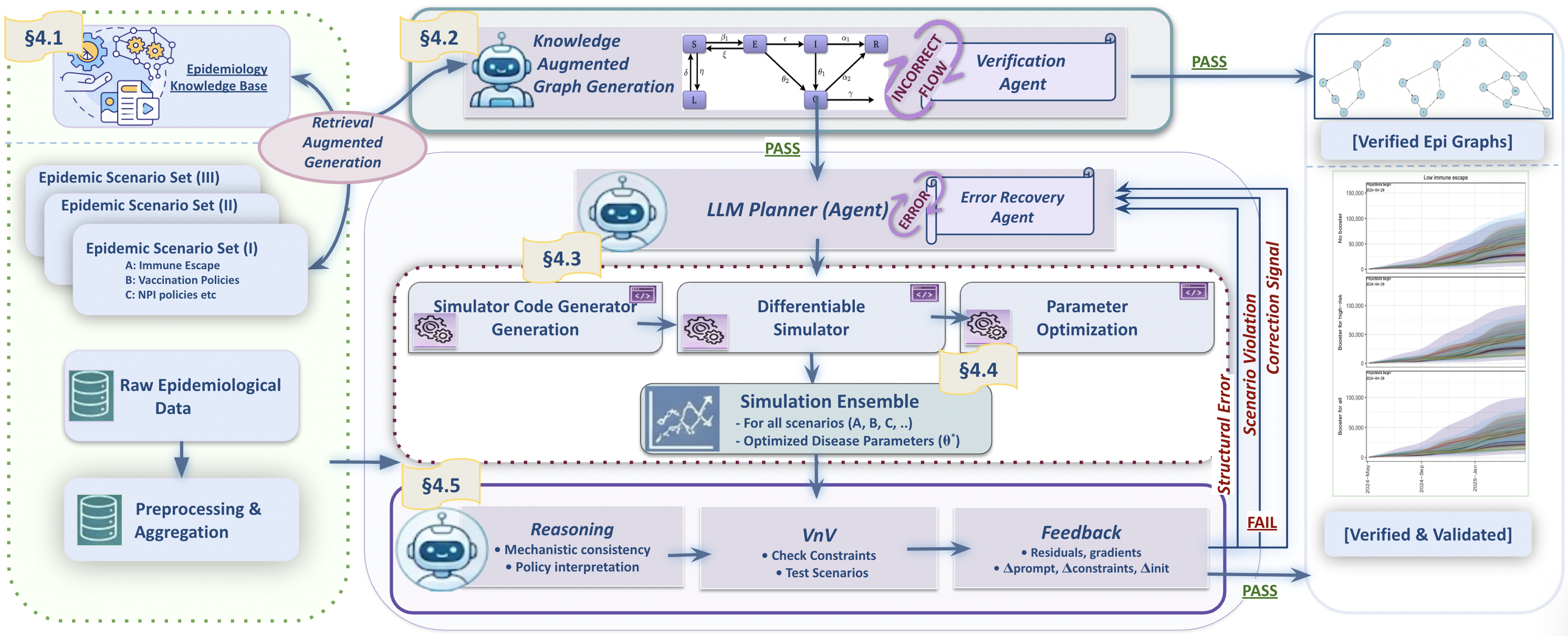
Prompt <-> Flow Graph -> Simulator Code -> Results.
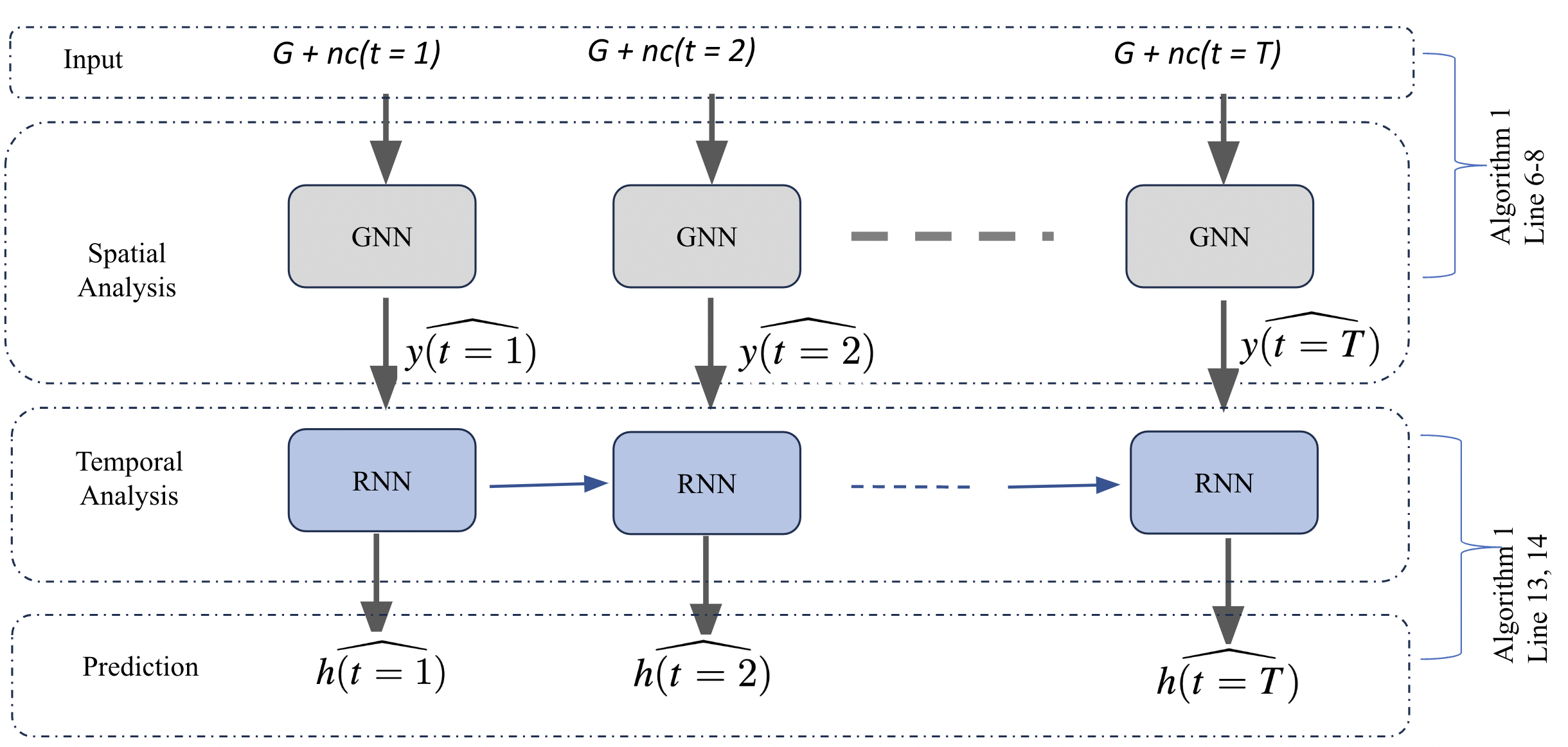
Graph-Based Prediction of Spatio-Temporal Vaccine Hesitancy From Insurance Claims Data
This work introduces a hybrid spatio-temporal framework, VaxHesSTL, that combines a Graph Neural Network (GNN) to model spatial relationships between ZIP codes with a Recurrent Neural Network (RNN) to capture temporal dynamics, enabling ZIP-code–level prediction of vaccine hesitancy.
The model leverages an aggregated contact network derived from population mobility rather than geographic proximity alone, and uses an active learning strategy to accurately forecast hesitancy even when ground-truth data is available for only a subset of regions.
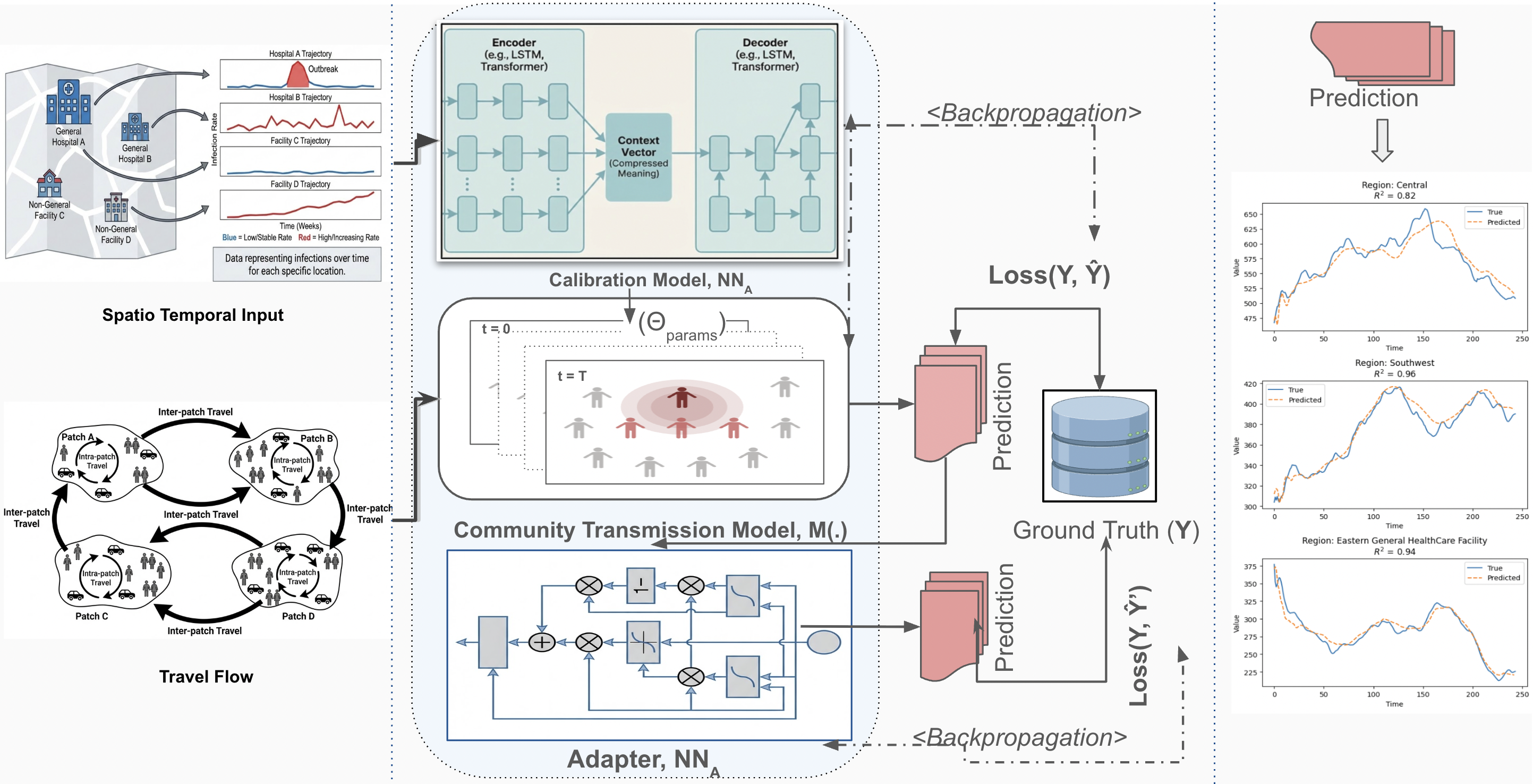
Forecasting and Analyzing MRSA Infection Patterns with Community and Healthcare Transmission Dynamics
CALYPSO, a hybrid framework that integrates neural networks with mechanistic metapopulation models to capture the spread dynamics of infectious diseases (i.e., MRSA) across healthcare and community settings
Our model improves statewide forecasting performance by over 4.5% compared to machine learning baselines, while also identifying high-risk regions and cost-effective strategies for allocating infection prevention re- sources.
Experience
Graduate Research Assistant · University of Virginia
Working on infection forecasting, hospital-acquired infections, vaccine hesitancy modeling, and genomic prediction using knowledge-augmented ML and epidemiological simulators.
Software Engineer · Semion Ltd
Developed medical software for radiologists and physicians, applying deep learning to MRI and X-ray data to aid disease diagnosis and reduce false negatives.
Graduate Teaching Assistant · University of Virginia
Teaching assistant for Algorithmic Economics and Computer Science Perspective, supporting students with assignments, projects, and course materials.
Education
PhD in Computer Science
Research interests: GNNs, RNNs, LLMs, computational epidemiology, healthcare systems modeling.
ME in Computer Science
GPA: 4.0/4.0 · Focus on Graph and Machine Learning.
BSc in Computer Science and Engineering
GPA: 3.63/4.0 · Coursework in algorithms, machine learning, graphics, image processing, systems, and databases.
Contact
I’m happy to connect about research collaborations, internships, and Applied ML in Healthcare and network science.
- Email: hht9zt [at] virginia.edu
- Alt: ritudatta281 [at] gmail.com
- GitHub: github.com/RituDatta281
- Google Scholar: scholar profile
- Biocomplexity profile: biocomplexity.virginia.edu/our-team/rituparna-datta